
Last Updated on December 31, 2025
A Healthy Low-Calorie Greek Recipe and some Hellenic Memories:
My first visit to Greece was a shock. I was on a school cruise – in the 1970s, some of the cruise liners used to rent out space in the bows of the ship to school groups. We flew from London to Athens into blazing sunshine and, after a fleeting visit to the Parthenon, boarded the ship. I remember thinking it was HORRIBLE. Bunk beds, very little space and shared bathrooms. But our first stop made everything worth it. We went to Mykonos, mooring a mile or so from the island and then taking a small boat across. And from there we were ferried to Delos, a tiny uninhabited island full of Ancient Greek ruins. I remember the remains of houses and temples built thousands of years ago. But more than anything, I remember the bluest sea and the brightest flowers.

I didn’t go back to Greece until I’d left home and was at University. My part-Greek boyfriend had family living along the coast from Athens, and his parents had a flat there. So, we spent several weeks there one summer doing very little. I didn’t even have to cook. Every day, one or another of his Aunts would appear while we were at the Beach with trays full of stuffed vegetables, filo pies or pasta dishes. I have no idea how they made the dishes, all I know is that everything tasted delicious and very different to anything I ate at home. Sometimes we’d go out to a local fish restaurant, where trays of fish on ice would be brought out for us to pick from. The most I did was make mayonnaise with vast quantities of Greek olive oil that had been left in the flat or cut up tomatoes for a salad.

Yoghurt with fresh fruit or Greek honey was the perfect start to the day. The yoghurt was nothing like the sort I ate at home, fresh and clean tasting, thick and creamy. It was my first taste of real Greek yoghurt. I suspect it was in some of the dishes my boyfriend’s family brought round too, but since I don’t speak a word of Greek and they didn’t speak English, I never found out. I have, however, learnt since to use Greek yoghurt to baste filo pastry when making dishes like Spanakopita – it’s a lighter alternative to brushing the filo with olive oil that produces a nice crispy pastry.

If you want to make dishes that really taste authentic, I think it’s crucial to make sure as much as possible of what you use is sourced from the country where the dish originates. Greek olive oil DOES taste different to Italian (at least the Kalamata type that I buy). It is more peppery and somehow more ‘buttery’. And, herbs like Oregano have a unique taste that I suspect is something to do with what the French call ‘Terroir’ – that combination of climate, soil and geography that differentiates wines from source. In the case of yoghurt, one of the reasons I think Total Greek is so popular is that it is the ONLY genuinely Greek yoghurt widely available in the UK at the moment. And, by that I mean it is made in Greece from Greek milk and Greek cultures. It’s 100% natural and high in protein. And it comes in 3 fat levels. I’d recommend using the highest fat, Classic, for cooking, because it is less likely to split, but I generally eat 0% or 2% for desserts or dips to save on calories! I usually have all three sorts in my fridge because they are great for 5:2 diet fast days – low calorie but high protein, which helps to keep you feeling full for longer, and with no added sugar or other nasties, so you can use them as you want.
This recipe for Greek Yoghurt Stuffed Sea Bream comes from Tonia Buxton, one of my favourite Greek Chefs. And, it’s perfectly suited to the 5:2 diet because it has under 300 calories per serving.

Greek Yoghurt Stuffed Sea Bream – 5:2 Diet
Ingredients
- 100 g TOTAL Greek Yoghurt
- 4 Large Sea Bream
- 2 tablespoons Extra Virgin Olive Oil
- 100 g Capers soaked in water to remove the salt then drained
- 30 g Flaked Almonds
- 2-3 Spring Onions finely sliced
- 4 tablespoons Flat leaf parsley finely chopped
- 1 Lemon Juiced
- 4 Lemon To serve
- Salt and freshly ground pepper
Instructions
- Ask your fishmonger to scale, gut and remove the gills from the sea bream. Wash the fish inside and out under cold running water and pat dry with kitchen paper.


- Place a sheet of foil on a baking tray and pinch up the edges to make a rim. Brush with olive oil. Pre-heat the oven to 200c
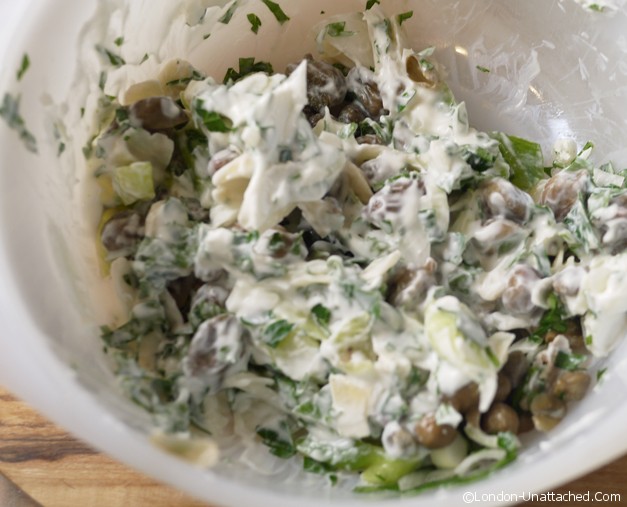
- Brush each fish with olive oil inside and out and season with pepper and salt. Mix together the capers, yoghurt, almonds, spring onions, parsley and lemon juice and stuff this into the fish cavities. Transfer the fish onto the baking tray and place in the oven for 20 minutes

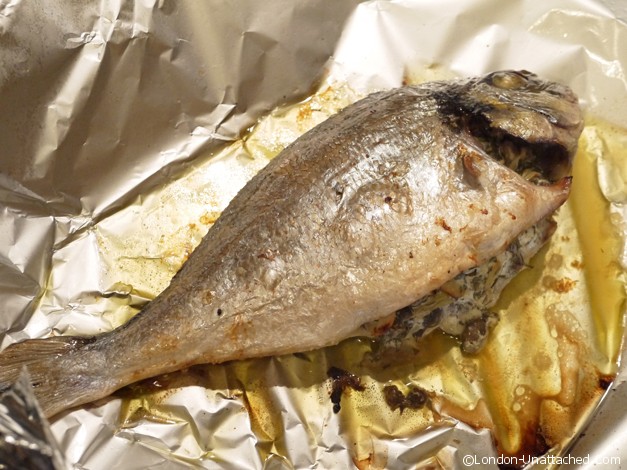
- You can tell when the fish is cooked when it starts to flake away from the bone, or when the skin is crisp and bubbles up from the flesh of the fish.
- Tonia recommends serving with gigantes beans and a green salad. I made a small Greek salad with tomatoes and olives which was delicious


Leave a Reply