
Last Updated on January 4, 2026
A journey through India’s culinary heritage
Seven Kitchens (me:ze) is a fascinating journey through seven distinct communities across India. This is the second cookbook from Torie True, who previously wrote Chilli & Mint: Indian home cooking from a British kitchen. She is both a cookbook writer and a teacher, and London-based readers can enrol in her classes. What piqued my interest about Seven Kitchens is its exploration of the influence of migration on Indian cuisine. Those who enjoy delving deeper into food cultures will find much to learn and digest. Chapters include Indo-Chinese, Anglo-Indian, Syrian Christian, Goan Portuguese, Tibetan-Nepalese, Parsi, and Mughal. If you have been fortunate enough to travel in India, you will have noticed these regional variations, and I enjoyed learning about the history of these diverse dishes.

Chinese immigrants settled in Kolkata from the late 1700s and developed a cuisine of sweet, salty, sour and spicy dishes. One of the many vegetarian dishes I was drawn to in the Indo-Chinese chapter in Seven Kitchens, Hakka Chilli Paneer is a tasty example of this style of cooking. Hakka, which translates as ‘guest people’, were a community from South China that migrated to Kolkata.
Anglo-Indian food is familiar to UK diners and cooks, with dishes like chicken korma, kedgeree, and mulligatawny soup among the most popular at Seven Kitchens. I loved the recipe for pumpkin and tamarind soup, especially useful at this time of year. I made a quick, vibrant salad, Allegra’s Kachumber Salad, a ubiquitous dish across India. Named after True’s daughter, this chilli-free salad is great to serve alongside spicy dishes as it is cooling and fresh.

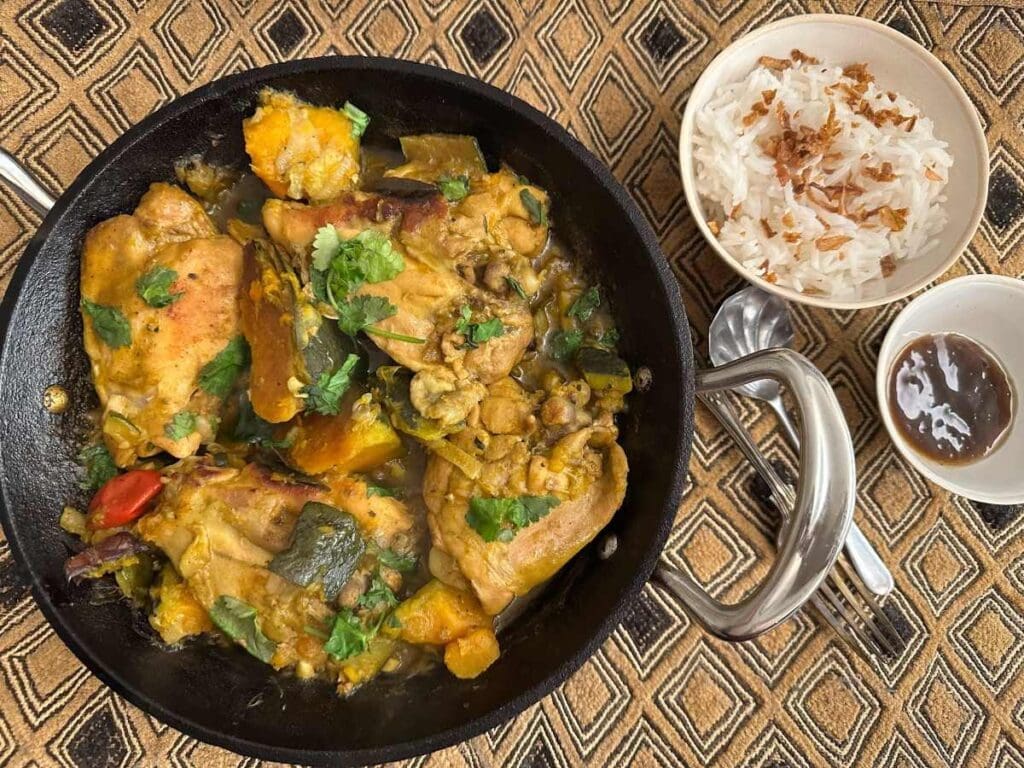
Kerala has one of the oldest Christian communities in the world, with Syrian Christians arriving on the Malabar coast in AD 52, leading many Brahmin families to convert. Over the centuries, the coastal area attracted a diverse range of traders, and the resulting cuisine is a melange of flavours. Coconut is a key ingredient, thanks to the proliferation of coconut palms throughout the region. I chose a recipe that was simply called Chicken Stew, known in Kerala as ishtew. The addition of coconut milk and a range of spices – all of which you are likely to have in your kitchen – made for a deeply flavoursome dinner. The stew contains a range of vegetables, so it really is a one-pot dinner – just make some rice on the side. I am waiting for mango season to try my hand at Keralan Ripe Mango Curry, which has me drooling over the photograph.
Goa remained under Portuguese control for over 450 years, gaining independence only in 1961, 14 years after the rest of India. Having already discovered South America, the Portuguese brought many exotic ingredients to this area of India, including pineapples, squash, cashew nuts, tomatoes, papayas, corn, chillis, and potatoes. Goan cuisine leans towards meat eating, and the curries have a sour note thanks to the Portuguese addition of vinegar. Intriguing recipes include Goan Pork Sorpotel, which originated in the Alentejo region of Portugal and is a popular choice for Goan, Christian weddings and festivities. It is often eaten at Christmas, in case you are looking to change gears this year.
Tibetan-Nepalese cooking can be found in the state of Sikkim and in Darjeeling, West Bengal. As Sikkim borders Tibet, Nepal, Bhutan and West Bengal, one can expect a wide range of influences on the cuisine of this region. Sichuan peppers are popular, as are fermented dishes, which compensate for the lack of fresh vegetables in the harsh winters. I made a Nepali mixed lentil stew, a satisfying blend of legumes and warming spices, including coriander, cumin, turmeric, and Kashmiri chilli powder. Lots of garlic, ginger and fresh coriander all add depth of flavour to the two types of lentils and a variety of beans. It is a delicious vegetarian dish, suitable for vegans too.

The chapter on Parsi cuisine introduces readers to the Zoroastrian cooking dating back to the sixth century BCE. Parsis settled predominantly in Gujarat and Maharashtra in western India, fleeing persecution from what is now Iran. Recipes might include eggs, dried fruits, nuts and cream. I am bookmarking ricotta and cardamom teacake for my next afternoon tea party, as I particularly enjoy a cake that is not too sweet and is gently spiced.
Finally, Mughal cooking will be familiar to anyone who has travelled in Rajasthan. Having done so myself, I was delighted to find a range of dishes that were both aromatic and gently spiced. Chicken biryani Mughal style is perfect for a weekend lunch, and a recipe for the spice mix is provided – as is the case with many of the recipes in the book – so readers can develop skills in making their own spice mixes. One of my favourite Mughal dishes is dal makhani, a very rich and creamy lentil dish. In Seven Kitchens, there is a variant on the luxurious lentil theme with Mughlai green moong dal, which looks fabulous. My favourite breakfast in India was a masala omelette, and at Seven Kitchens, there is a Mughal-style masala omelette that adds cinnamon, cloves, green cardamom, and black pepper to the egg mixture. Another recipe joins my list.

Seven Kitchens is an attractive book, from its dynamic, colourful cover featuring rangolis, a traditional Indian art form made with powders, flowers and rice, which you will find on the floors of Indian temples, houses and hotels. The recipes are never overly complicated, and readers can be confident that they will produce a deliciously aromatic and well-spiced dish, time after time. This was certainly my experience when attempting a few of the recipes. Seven Kitchens will keep you busy for days in your own kitchen. From quick and easy dishes to more complex, well-explained recipes for making steamed buns, momos, breads, and rice pancakes – this is a cookbook that is both informative and well-researched, with dishes to encourage travelling with your palate.
Seven Kitchens RRP £25 can be purchased at major bookshops or online https://www.amazon.co.uk/Seven-Kitchens-Journey-Culinary-Heritage where it sells for £19.05

Nepalese Mixed Lentil Stew
Ingredients
- 100 grams red split lentils
- 100 grams yellow moong-mung lentils
- 900 ml cold water
- 2 tbsp vegetable, sunflower or rapeseed oil
- 1 tsp cumin seeds
- 1/2 tsp ajwain/carom seeds
- 1/4 tsp fenugreek seeds
- 1/4 tsp asafoetida powder optional
- 2 dried whole red chillies
- 1 large onion finely chopped
- 1 tsp fine salt
- 1 tsp finely grated garlic
- 1 tsp finely grated ginger
- 1 tsp ground turmeric
- 1 tsp ground coriander
- 1/4 tsp ground cumin
- 1/2 tsp Kashmiri chilli powder optional
- 3 large tomatoes diced
- 2 tbsp finely chopped fresh coriander, leaves and stalks
- 2 400g jars or tins of red kidney beans, black-eyed beans, chickpeas, green lentils, butter beans or white beans drained and rinsed
- 300 ml water
- 1/2 lemon, juiced
Instructions
- Place the lentils in a bowl and cover with water. Wash well with your hands to stir thoroughly, drain and place in large, deep pan. Cover with 900ml cold water.
- Bring to the boil and simmer for 15-20 minutes. While lentils cook, skim off and scum off the top.
- Check lentils are cooked – when they give easily when squeezed between thumb and forefinger. If they still have some bite, cook a little longer, add water if needed.
- In a separate pan heat the oil and add cumin, ajwain and fenugreek seeds along with asafoetida if using and dried chillies. Stir for 10 seconds and then add onion and salt.
- Fry the onions for 6-7 minutes until lightly browned and then add garlic and ginger. After another minute add ground turmeric, coriander, cumin and Kashmiri chilli powder. Mix well and then add tomatoes.
- Let tomatoes break down and release their juices over 4-5 minutes. Add 1 tablespoon of fresh coriander and then stir in the beans/pulses of your choice.
- Pour the cooked lentils into the spiced tomato base, add the extra water and stir thoroughly to mix all the ingredients together.
- SImmer the stew for 10 minutes, check the seasoning. Add more salt if required. Stir in the remaining fresh coriander and lemon juice to serve.

Leave a Reply